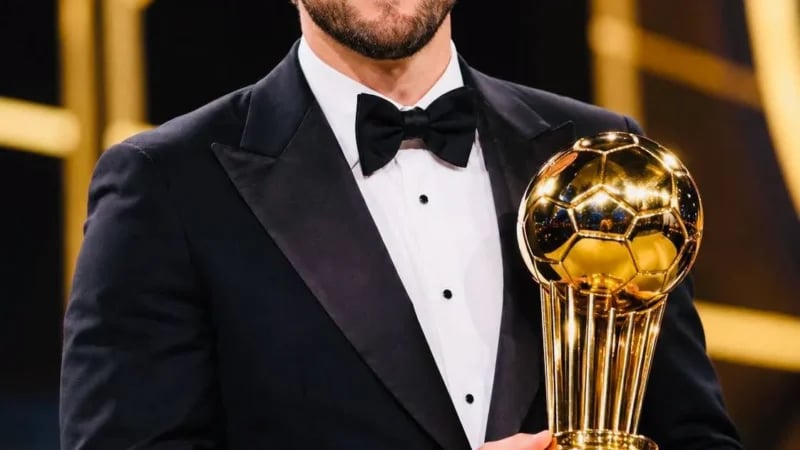
On the evening of 26 October 2026, at the London Palladium, Paris Saint-Germain were confirmed as the Men’s Club of the Year at the Ballon d’Or ceremony staged by France Football. It was the second year in a row that the French club collected the honour, and the manner of the defence left little room for debate. Ousmane Dembélé, who had won the individual Ballon d’Or the previous year, stepped up to accept the award on the club’s behalf, a neat piece of symmetry linking PSG’s leading man to the collective prize.
The award is a backward-looking verdict rather than a prediction, a jury’s judgment on a campaign already completed. In that sense the 2025/26 season had already written PSG’s case for them. A club that for years had been defined by near misses on the continental stage arrived at the ceremony as back-to-back European champions and, for the first time in its history, holders of a world title.
The season that earned it
The foundation was domestic. In Ligue 1, PSG finished first again, retaining the French championship with a record of 24 wins, 4 draws and 6 losses. They scored 74 goals and conceded 29, a goal difference that reflected both attacking depth and a defence that rarely came apart over the course of a long league program. The league title has become something close to an expectation in Paris, but repeating it while competing on four other fronts is a different kind of achievement.
The centrepiece, inevitably, was the Champions League. PSG won Europe’s premier club competition for a second consecutive season, defeating Arsenal in the final on 30 May 2026. The match went to a penalty shootout, a fittingly tense conclusion to a European run that confirmed the club as the standard-setter of the era. Winning the trophy once can be framed as a breakthrough; winning it twice in succession reframes a club as a dynasty in the making.
2Consecutive Champions League titlesAround those two pillars, PSG assembled a collection of silverware that stretched across the calendar. The season opened with the UEFA Super Cup on 13 August 2025, a match that finished 2-2 and was settled on penalties. It closed its European and intercontinental business with the FIFA Intercontinental Cup on 17 December 2025, when PSG defeated Flamengo of Brazil on penalties to become world champions for the first time. In between, on 8 January 2026, the club added the Trophée des Champions, the French season-opening showpiece, again drawing 2-2 before prevailing from the spot.
A haul defined by fine margins
There is a pattern worth noting in that list. Three of PSG’s cup successes, the Super Cup, the Trophée des Champions and the Champions League final itself, were decided by penalty shootouts, and the Intercontinental Cup final was settled the same way. A less charitable reading might call it luck. A more considered one recognises the composure required to keep winning one-off matches under the greatest possible pressure, and the squad depth needed to stay standing at the end of a season this demanding.
| Competition | Date decided | Outcome |
|---|---|---|
| UEFA Super Cup | 13 August 2025 | 2-2, won on penalties |
| FIFA Intercontinental Cup | 17 December 2025 | Defeated Flamengo on penalties |
| Trophée des Champions | 8 January 2026 | 2-2, won on penalties |
| UEFA Champions League | 30 May 2026 | Defeated Arsenal on penalties |
| Ligue 1 | Season-long | 1st (24-4-6, 74 GF, 29 GA) |
The one blemish, and it is a minor one against that backdrop, came in the Coupe de France, where PSG were eliminated at the Round of 32 stage. For a club of its resources an early domestic cup exit is the kind of result that would once have dominated the post-season conversation. In 2025/26 it registered as a footnote, a reminder that even a season this complete leaves a loose thread or two.
The shortlist and the context
PSG did not win in a vacuum. The Club of the Year shortlist also featured Arsenal, the side they beat in the Champions League final, along with Bayern Munich, Flamengo and the Norwegian club Bodø/Glimt. The presence of Bodø/Glimt is itself a small story about the widening geography of European success, and Flamengo’s inclusion reflected a strong continental campaign in South America. But none of the contenders could match a résumé that combined a retained domestic league, a retained European crown and a first world title in a single twelve-month window.
The campaign was directed by head coach Luis Enrique, whose tenure has given PSG a clearer tactical identity than the star-driven teams of earlier seasons. The collective nature of the recognition matters here. Club of the Year is not an individual prize dressed up as a team award; it rewards an institution, its squad, its staff and its season as a whole. That the trophy was handed over by Dembélé, the previous year’s individual winner, underlined how closely PSG’s personal and collective honours had become intertwined.
Where this sits in the club’s history
For most of its modern era, PSG’s European story was one of frustration: heavy investment, deep squads and runs that stopped short of the final hurdle. The back-to-back Champions League titles close that chapter definitively. Retaining the Club of the Year award is the external acknowledgment of that shift, a jury confirming what the results already implied.
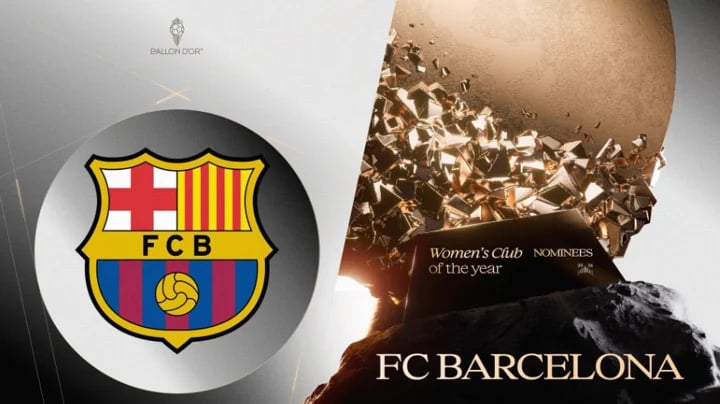
It is worth placing the women’s side of the ceremony alongside it for completeness: Barcelona Femení took the Women’s Club of the Year award on the same night, a reminder that the Ballon d’Or evening now recognises excellence across both the men’s and women’s games.
What makes the 2025/26 case so clean is its breadth. PSG did not simply win the biggest prize and coast elsewhere; they retained their league, swept up the one-off super-cup fixtures, conquered the world, and reached the summit of Europe for a second straight year. The single early exit in the Coupe de France is the exception that proves how complete the rest of the season was.
The takeaway
Awards voted after the fact can feel ceremonial, but this one reads as an accurate summary of a definitive season. Paris Saint-Germain won the 2026 Men’s Club of the Year because they built the most complete campaign in world football across 2025/26: a retained French title, a retained Champions League, a first world championship and a cabinet full of trophies earned under pressure. The back-to-back nature of both the European crown and the award itself is the key detail. One dominant season can be an outlier. Two in a row, recognised twice over, is the signature of a club that has moved from contender to benchmark.