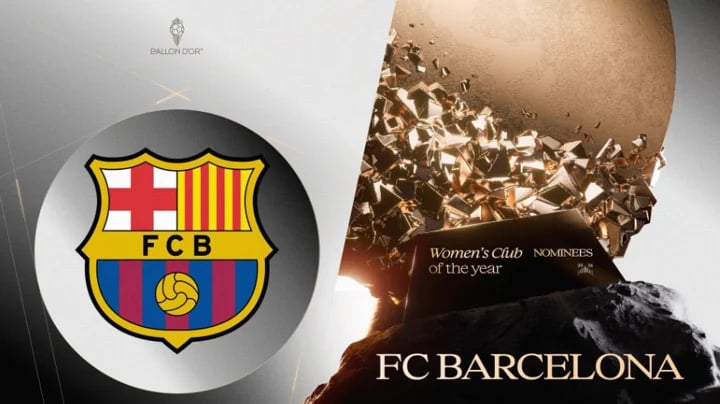
On 26 October 2026, at the Ballon d’Or ceremony staged in London, Pere Romeu was named winner of the women’s Johan Cruyff Trophy, the award that recognises the best coach of the year. The honour arrived on the back of a season in which FC Barcelona Femeni won every competition they entered under his direction, a run of results that left the voters with a straightforward case to make.
The distinction carries an extra line in the club’s history. Romeu is the first FC Barcelona coach to claim this particular award in either the women’s or the men’s category, a notable marker for an institution that has supplied so many of the modern game’s defining teams and managers. Accepting the trophy, he struck a collective note rather than a personal one: “I am very grateful and I wish they could all be here to collect the award with me.”
What the Johan Cruyff Trophy Is
The Johan Cruyff Trophy is the coach-of-the-year prize presented within the Ballon d’Or framework, named in memory of the Dutch footballer and manager whose ideas shaped a generation of play at Barcelona and beyond. It is awarded in both a men’s and a women’s category, and it sits alongside the ceremony’s better-known individual player awards. In the 2026 edition, Romeu took the women’s prize while Luis de la Fuente was recognised with the men’s equivalent.
Because the award is pegged to a single year’s work, it tends to reward coaches whose teams have both won and convinced. A trophy haul alone is not always enough; the manner of the dominance matters to the electorate. In Romeu’s case the two aligned. His Barcelona side did not simply collect silverware, they did so across the full span of competitions open to them, domestic and continental.
The Season Behind the Award
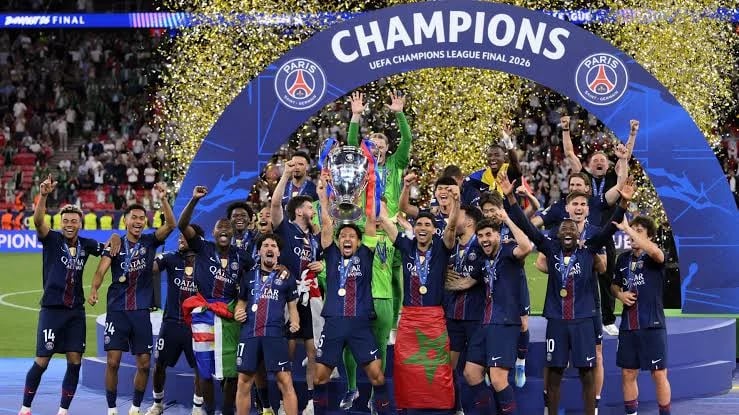
The club’s official account of the win credits a campaign in which Barcelona Femeni swept the field. The competitions listed were Liga F, the Copa de la Reina, the Spanish Super Cup, the Copa Catalunya and the UEFA Women’s Champions League. The European title, the one that travels furthest and means the most to the wider football audience, was sealed with a 4-0 win over OL Lyonnes in the final.
That scoreline is worth pausing on. Lyon, competing under the OL Lyonnes name, have been the defining European power of the women’s game for well over a decade, and meeting them in a final is the sternest test the competition offers. To win it by four clear goals is the kind of result that settles arguments. For a coach-of-the-year ballot, a decisive victory over the continent’s benchmark club in the showpiece match is close to an ideal piece of evidence.
4-0UEFA Women's Champions League final vs OL LyonnesThe domestic side of the season tells its own story. Liga F is the top division of women’s football in Spain, and the Copa de la Reina is the national cup; winning both in the same year is the classic domestic double. Adding the Spanish Super Cup and the regional Copa Catalunya rounds out a set that leaves nothing on the table. A clean sweep of this kind is rare in any era and in any country, and it is the clearest possible foundation for a personal award.
| Competition | Type | Outcome |
|---|---|---|
| UEFA Women’s Champions League | European | Won (4-0 v OL Lyonnes in the final) |
| Liga F | Domestic league | Won |
| Copa de la Reina | Domestic cup | Won |
| Spanish Super Cup | Domestic | Won |
| Copa Catalunya | Regional | Won |
Why a Clean Sweep Weighs So Heavily
Coach-of-the-year awards reward consistency as much as peak performance, and that is where a full sweep becomes so persuasive. Winning a single knockout competition can hinge on a good night, a favourable draw or a refereeing call. Winning everything across an entire season removes those caveats. It implies a team that performs week after week, in the grind of a league and the pressure of cup finals alike, and a coaching staff able to manage a squad through the fatigue and rotation that a crowded calendar demands.
A league title is earned over months of fixtures, while a cup is decided in a handful of matches. Taking both in the same season, and the continental prize on top, is evidence of depth and management as much as talent.[/callout>
There is also the matter of expectation. At a club with Barcelona’s resources and recent pedigree in the women’s game, anything short of trophies is treated as a shortfall. Managing that pressure, and still delivering across the board, is part of what the Johan Cruyff Trophy is designed to acknowledge. The award does not go to the coach who overachieved with modest means; it goes to the coach judged the best in a given year, and in 2026 the voters saw no stronger candidate.
A First for the Club
For all the managers Barcelona has employed across its men’s and women’s teams, and for all the admiration the club’s style has drawn, the Johan Cruyff Trophy had not previously come to the Camp Nou through any of them. Romeu changing that is a genuine milestone, and it is fitting that it arrived through the women’s side, which has grown over the past decade into one of the standard-setters of the European game.
The symbolism of the award’s name is hard to ignore. Cruyff’s influence on Barcelona’s footballing identity is woven into the club’s self-image, and a coach-of-the-year prize bearing his name finally landing with a Barcelona manager closes a small circle. That it came in a year of total domestic and European success only sharpens the point.
Reading the Win
Set against the broader history of the women’s game, Romeu’s 2026 fits a familiar pattern: the coach-of-the-year award tends to follow the team that has most comprehensively owned the season. What distinguishes this particular win is the completeness of it. There was no competition Barcelona entered and failed to win, and the one result that will be remembered longest, the Champions League final, was emphatic rather than narrow.
Awards like this are, in the end, a snapshot. They capture a single year and the judgement of those who vote, and they do not always track neatly with long-term reputation. But as a record of the 2026 season in women’s football, the women’s Johan Cruyff Trophy going to Pere Romeu is an accurate one. The team won everything, the coach was recognised for it, and the club added a first to its collection along the way.