The 2026 Ballon d’Or nominee shortlist is out, and before anyone reaches for a coronation, a word of discipline is in order: this is a list of contenders, not a result. The ceremony has not delivered a winner in any of the sources in front of me, and I am not going to manufacture one. What we have is a 30-man field, reported consistently across major outlets, with a handful of names doing most of the heavy lifting in the headlines.
According to ESPN, Harry Kane and Kylian Mbappé lead a 30-man shortlist. FOX Sports frames the same list around Kane, Mbappé and Lamine Yamal. Al Jazeera puts Ousmane Dembélé at the top of its billing alongside Mbappé, Kane and Yamal. Those four names, Kane, Mbappé, Yamal and Dembélé, are the ones that recur most often when you line the reports up side by side, and that agreement is the closest thing we have to a consensus early read.
What the sources actually confirm
My beat is the numbers behind the noise, so let me be precise about the difference between what is reported and what is verified. The size of the field, 30 nominees, is confirmed by both ESPN and FOX Sports. Beyond the number, each outlet has chosen to front-load different names in its headline, which is normal editorial behavior: a British broadcaster leans into the British players, a North American outlet leans into a player who plays in North America, and so on. That is signal about audience, not about the ballot order.
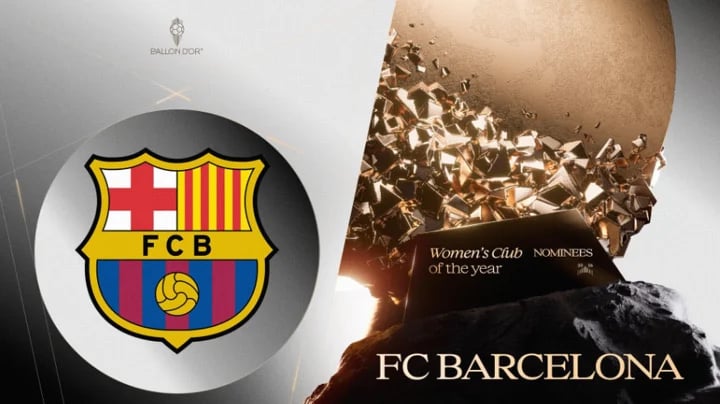
Here is the roll call I can stand behind, drawn strictly from the named players in these reports. Kane appears in ESPN, FOX Sports and the BBC. Mbappé appears in ESPN, FOX Sports, olympics.com and Al Jazeera. Yamal appears in FOX Sports and Al Jazeera. Dembélé is named by Al Jazeera. Lionel Messi is named by both olympics.com and MLSsoccer.com. The BBC adds Jude Bellingham and Declan Rice to the confirmed pool. olympics.com also flags Alexia Putellas, which is a reminder that the women’s Ballon d’Or shortlist is running in parallel with the men’s award.
What none of these sources give me, at least not in the material provided, is the complete 30-man list with every name and club attached. So I will not print 30 names as if they were gospel. I will print the ones the reporting actually supports, and I will tell you plainly where the list runs out.
PlayerClub (widely reported)Named byHarry KaneBayern MunichESPN, FOX Sports, BBCKylian MbappéReal MadridESPN, FOX Sports, olympics.com, Al JazeeraLamine YamalBarcelonaFOX Sports, Al JazeeraOusmane DembéléParis Saint-GermainAl JazeeraLionel MessiInter Miamiolympics.com, MLSsoccer.comJude BellinghamReal MadridBBCDeclan RiceArsenalBBCAlexia Putellas (women’s award)Barcelonaolympics.com
The English angle the BBC is chasing
The BBC’s framing is the most locally flavored of the bunch, and it is worth unpacking because it tells you something about how this shortlist is being read in England. The broadcaster puts Kane, Bellingham and Rice in its headline, three players who anchor the English national side. That is three of the confirmed names from a single country, which is not a small thing on a 30-man list.
Kane is the connective tissue here. He is the only player who shows up in the English framing and in the ESPN and FOX Sports framing, which puts him at the intersection of the two dominant story angles: the goalscorer’s individual case and the national-team narrative. When a name survives that many different editorial filters, it usually means the underlying case is strong. I would not read placement into it, because none of these sources rank the nominees, but I would read durability into it.
30players on the men's shortlist (ESPN, FOX Sports)
Bellingham and Rice are the more interesting inclusions to track, precisely because only one of my eight sources names them directly. That does not make them weak candidates. It means their nominations are, in this particular set of reports, single-sourced, and I flag single-sourced facts rather than laundering them into consensus. If you are building a mental model of this race, put Kane in the firmly-established column and put Bellingham and Rice in the confirmed-but-lightly-covered column.
Messi, Mbappé and the two poles of the list
The Messi inclusion is the one that travels furthest geographically. olympics.com lists him among a star-studded field, and MLSsoccer.com devotes a whole item to the fact of his nomination. For a North American audience, that is the headline that lands: a player competing in Major League Soccer is on the shortlist for the sport’s most prestigious individual prize, an award USA Today describes as the most prestigious in football.
At the other pole sits Dembélé, whom Al Jazeera elevates to the top of its billing. It is a useful reminder that the shortlist is not a two-horse race dressed up as thirty. Al Jazeera, olympics.com and MLSsoccer.com each anchor their coverage to a different name, which tells you the field is being read as genuinely open. When four or five outlets cannot agree on a single face for the story, that is usually because the case for several candidates is close enough that the choice comes down to house style.
When a name survives multiple different editorial filters, it usually means the underlying case is strong.
How to read a shortlist without a winner
This is the part where restraint earns its keep. A nominee list is an input, not an output. The Ballon d’Or is decided by a vote, and until that vote is counted and announced, every name on the shortlist carries the same official status: nominated. The headlines create an informal hierarchy by choosing whom to name first, but that hierarchy is journalistic shorthand, not a leaderboard.
So here is how I would frame the current state of play. There is a confirmed 30-man field, per ESPN and FOX Sports. There is a cluster of names, Kane, Mbappé, Yamal and Dembélé, that the most sources agree belong near the front of the conversation. There is a well-covered English contingent led by Kane and supported by Bellingham and Rice via the BBC. There is a global talking point in Messi. And there is a parallel women’s award, with Putellas surfacing in the olympics.com coverage. Everything beyond that, including the identity of the eventual winner and the full back half of the 30, is not established by these sources, and I am not going to fill the gap with guesswork.
The North American backdrop
For readers in the United States and Canada, the useful context is that this shortlist arrives with the sport’s center of gravity having recently swung across the Atlantic. The Ballon d’Or remains a European-administered award covering the global game, but the presence of a Major League Soccer player among the nominees, confirmed by MLSsoccer.com and echoed by olympics.com, is the kind of detail that keeps the North American audience invested in a ceremony that has historically felt distant from this side of the ocean. It is a small data point, one name on a long list, but it is the sort of thing that widens the award’s footprint.
Verdict
Strip away the headline theatrics and the picture is clean. We have a confirmed 30-man shortlist, a consensus front group of Kane, Mbappé, Yamal and Dembélé, a documented English presence, and a globally resonant Messi nomination, with Putellas flagged on the women’s side. What we do not have, in any source here, is a winner, a full ranked list, or an official club-by-club breakdown of the entire field. My advice to readers is to treat the recurring names as the ones with the sturdiest cases and to hold everything else loosely until the ballot is counted. In a race this evenly billed across outlets, the humility is not a hedge. It is the accurate reading of the evidence we actually have.