On 26 October 2026, inside the London Palladium, Cata Coll was announced as the winner of the women’s Yashin Trophy, the prize given to the world’s best goalkeeper. For a player who spends most of her working life reacting to other people’s decisions, it was a rare moment of individual recognition in a position that usually only attracts attention when something goes wrong. Coll, of Spain and FC Barcelona Femení, became the second goalkeeper to lift the women’s version of the award, following England’s Hannah Hampton, who won the inaugural edition in 2025 while at Chelsea.
The Yashin Trophy, named after the Soviet goalkeeper Lev Yashin, had long existed only on the men’s side of the Ballon d’Or program. The decision to extend it to the women’s game acknowledged something that coaches and analysts had understood for years: goalkeeping in the women’s game had become a specialised, technically demanding discipline, and the best practitioners deserved their own category rather than being folded into the general conversation. Coll’s win in 2026 helped cement that idea in only the award’s second year.
A season defined by what did not happen
Goalkeeping awards are strange to judge, because the strongest case is often built on absence: the goals that were never conceded, the chances that never became anything. Coll’s 2025/26 campaign with Barcelona was a near-perfect illustration of that principle. Across all competitions, Barcelona conceded only around 21 goals in roughly 48 matches, a figure that speaks to a defensive structure operating at an exceptionally high level and to a goalkeeper reliable enough to keep the margins intact.
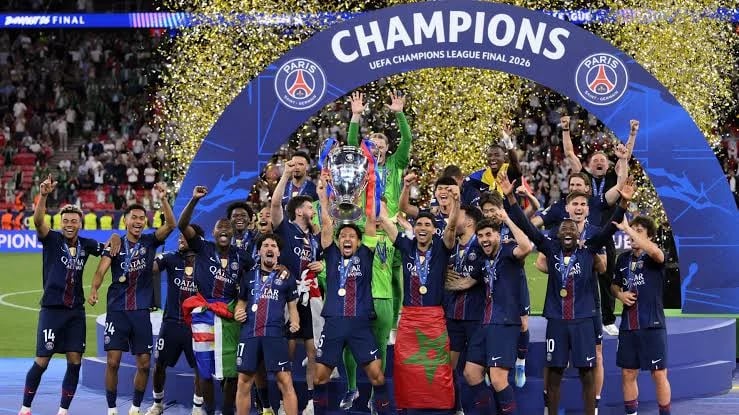
~21Goals conceded by Barcelona in all competitions, 2025/26 48Matches played across all competitions that seasonThose numbers do not exist in a vacuum. Barcelona won a quadruple in 2025/26, taking Liga F, the Copa de la Reina, the Spanish Super Cup and the UEFA Women’s Champions League. A clean sweep of that kind is impossible without consistency between the posts across competitions with very different rhythms: the week-to-week grind of a domestic league, the single-elimination tension of cup football, and the elevated technical demands of continental knockout ties. Coll was present for all of it, and the trophy haul became part of the evidence that the Yashin voters weighed.
The modern goalkeeper’s job description
What makes Coll’s recognition notable, from a tactical standpoint, is how much the role itself has changed. At a club like Barcelona, the goalkeeper is not a last line of defence so much as the first line of attack. The team’s possession-based identity requires a goalkeeper comfortable receiving the ball under pressure, breaking a press with a well-weighted pass, and positioning high up the pitch to act as a spare passer when the side pushes numbers forward. That style carries risk; it demands composure and precise decision-making, because a single misjudged touch can turn a build-up pattern into a clear chance for the opponent.
Coll fits that template. Her distribution and her calm in tight situations allowed Barcelona to play the way they wanted without constantly recalibrating for a weak link in goal. When the team did have to defend for its life, in the sharper moments of Champions League knockout football, she provided the shot-stopping and command of her area that keeps narrow leads intact. The combination of those two profiles, a footballing goalkeeper and a reliable one, is exactly what the modern elite game asks for, and it is rarer than the volume of excellent goalkeepers worldwide might suggest.
Barcelona’s goalkeeping tradition and Coll’s place in it
Barcelona Femení had already established itself as the dominant force in European women’s football before Coll’s award, winning multiple continental titles and reshaping expectations of what a women’s club could achieve both on the pitch and in terms of crowds and visibility. Within that project, the goalkeeping position had often been overshadowed by the attacking talent that filled highlight reels. Coll’s Yashin Trophy brought a different part of the team into focus and underlined that the club’s success was built on a complete side rather than a famous front line alone.
For Coll personally, the award marked a progression from promising understudy to the undisputed standard-bearer at one of the sport’s biggest clubs. Goalkeepers tend to develop later than outfield players, and the position rewards accumulated experience: reading situations, managing a back line, staying composed when the stakes rise. Her 2025/26 season was the product of that maturation, and the Yashin Trophy was its external confirmation.
The international dimension
Coll’s profile was raised further by her role with the Spain national team, which has spent recent years among the strongest sides in women’s international football. Spain’s rise to the top of the global game, crowned by their senior World Cup triumph, created a generation of players who became reference points at their positions, and Coll emerged as a central figure in goal for her country. International football tests a goalkeeper differently from club play: fewer matches, higher pressure per match, and tournaments where a single error can define a summer. Performing at that level for a leading national side added weight to her candidacy and helped distinguish her from club-only contenders.
How the women’s Yashin Trophy is taking shape
With only two editions completed, the women’s Yashin Trophy is still establishing its identity, and the early list of winners offers a useful snapshot of where elite goalkeeping sits. The table below sets out the award’s short history.
| Year | Winner | Nation | Club |
|---|---|---|---|
| 2025 | Hannah Hampton | England | Chelsea |
| 2026 | Cata Coll | Spain | FC Barcelona Femení |
Two winners from two of the strongest leagues and national teams in the women’s game suggest the award is already tracking the sport’s centre of gravity. Hampton’s 2025 win came amid Chelsea’s domestic dominance in England; Coll’s 2026 award followed Barcelona’s quadruple in Spain and Europe. In both cases the prize rewarded a goalkeeper at the heart of a trophy-winning collective rather than an individual carrying an otherwise ordinary side, which tells you something about how the position is valued at the very top: context and team success matter alongside raw ability.
A takeaway
Cata Coll’s 2026 Yashin Trophy is best read not as a single standout season in isolation but as the logical endpoint of several trends converging at once: a Barcelona team built to concede almost nothing, a tactical era that demands goalkeepers who can play as well as save, and a women’s game mature enough to honour the position on its own terms. The headline figure, a defence that leaked only around 21 goals across a 48-match season, will be the number people remember. The deeper story is that the award recognised a goalkeeper whose best work was often invisible, measured in the goals that never happened and the attacks that started at her feet.