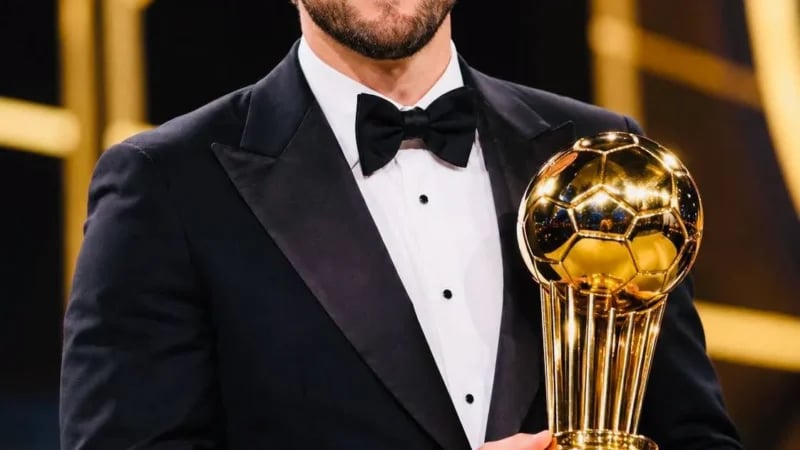
On 26 October 2026, at the London Palladium, Luis de la Fuente was named winner of the men’s Johan Cruyff Trophy, the Ballon d’Or’s award for the best coach of the year. The recognition arrived as head coach of the Spain national team, and it was the first time he had claimed the honour. The staging itself carried a note of history: the 2026 Ballon d’Or was the first edition held outside France, with the ceremony relocated from Paris to the heart of London.
For a coach whose public profile long trailed his results, the trophy functioned as a formal endorsement of a body of work that had been accumulating in plain sight. De la Fuente did not arrive at the top of the senior game as a celebrity appointment. He built his reputation through Spain’s youth system before inheriting the senior side, and the award reflects the culmination of a cycle in which his teams kept winning the matches that decide tournaments.
The record, stated plainly
The core fact is clean and verifiable. In the men’s winners list for the Johan Cruyff Trophy, the 2026 entry reads: Luis de la Fuente, Spain, as head coach of the Spain national football team, winning for the first time. There is no asterisk and no shared award. The coach of the year prize went to the man who had just led his country to the sport’s biggest prize.
2026First Johan Cruyff Trophy for de la FuenteWhat makes the citation stand out is the completeness of the portfolio behind it. Coach-of-the-year awards often reward a single season’s surprise. In this case the voters were weighing a sustained run of success with the same national team, a far rarer thing to assemble at international level, where a manager works with his players in short windows rather than daily.
A cycle of trophies under de la Fuente
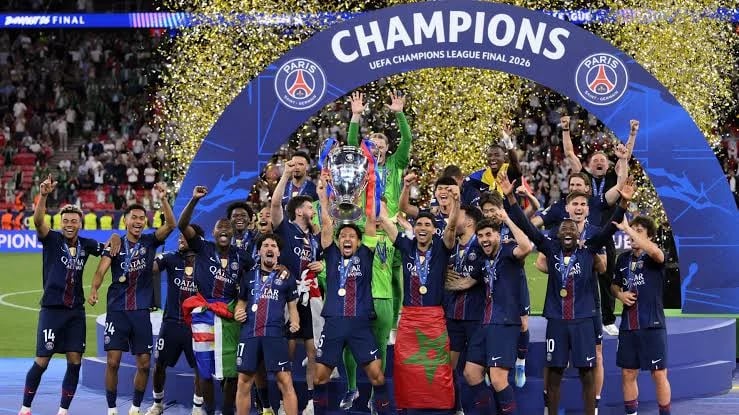
Spain’s modern run of silverware is the backdrop to the award. Under de la Fuente the national team lifted the UEFA Nations League in 2023, won the European Championship in 2024, and then took the FIFA World Cup title in 2026. That sequence, three major honours across consecutive cycles, is what reporting on the ceremony repeatedly pointed to when explaining the vote.
The World Cup triumph was the decisive line on the resume. Lifting the game’s premier trophy is the single achievement most likely to settle a coach-of-the-year debate, and it did so here. Coverage of the London ceremony framed de la Fuente’s selection as the natural consequence of a world title, the kind of result that moves a manager from respected to decorated.
| Honour | Year | Level |
|---|---|---|
| UEFA Nations League | 2023 | Senior men, UEFA |
| European Championship | 2024 | Senior men, UEFA |
| FIFA World Cup | 2026 | Senior men, FIFA |
| Johan Cruyff Trophy | 2026 | Individual, coach of the year |
It is worth separating what is firmly documented from what sits in the reporting cluster. The award itself, and the credit to the Spain national team, are confirmed in the official-style reference record. The specifics of Spain’s World Cup campaign, described in news coverage as an unbeaten run across the 2025 to 2026 period, come from match reporting rather than a governing-body statistical page, and are best treated on those terms. The point that matters for the honour is not disputed: Spain won the World Cup, and their coach won the coach-of-the-year award weeks later.
Why an international coach is hard to reward
There is a structural reason individual coaching awards tend to favour club managers. A club coach has his squad every day, shapes recruitment, and plays sixty or more competitive matches a season, giving voters a large sample to assess. An international coach is handed a fixed pool of players, meets them in brief camps, and is judged on a handful of high-pressure fixtures. Translating that limited contact into a tournament title, and then into back-to-back titles, requires a particular kind of management: clear identity, fast integration of players, and decisions that hold up under the compression of knockout football.
De la Fuente’s background in Spain’s development pathway is relevant here. A coach who has worked through the youth ranks arrives at the senior team already fluent in the players coming through and in the footballing principles the federation wants to express. That continuity helps explain how Spain maintained a recognisable style and a winning habit across different competitions and squads, rather than peaking once and fading.
The Johan Cruyff Trophy in context
The coach of the year prize carries the name of one of the sport’s most influential figures, a nod to the idea that coaching is a craft of ideas as much as results. Within the Ballon d’Or framework it sits alongside the player awards as the ceremony’s formal recognition of the bench. Winning it places a manager in a specific lineage of decorated international and club coaches, and for a national-team manager it is among the clearest individual honours available, since so much of international coaching success is collective and quiet.
The 2026 edition also matters for where it happened. Moving the ceremony out of France for the first time, to London, marked a shift in the event’s own history. De la Fuente’s name is therefore attached to a double first: his own first Johan Cruyff Trophy, collected at the first Ballon d’Or staged beyond French soil.
What the award settles
Reference records are built on settled questions, and this one is settled. The 2026 men’s Johan Cruyff Trophy belongs to Luis de la Fuente of Spain, won as head coach of the national team, in recognition of a cycle that ended with the World Cup. The individual prize is, in a sense, a receipt for a collective achievement, but it is a receipt that names the man who organised it.
For the longer historical ledger, the entry is straightforward and durable. A coach who spent years building through a national federation’s system reached the summit of the international game and was formally acknowledged for it. The numbers behind the honour, a world title and the broader run of major trophies that preceded it, give the award its weight. The 2026 line in the winners’ table will read the same way in a decade as it does now: de la Fuente, Spain, first time, world champions.