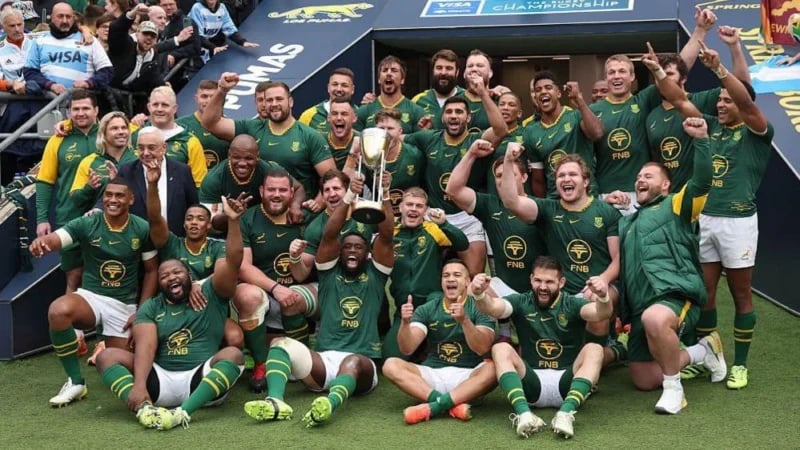
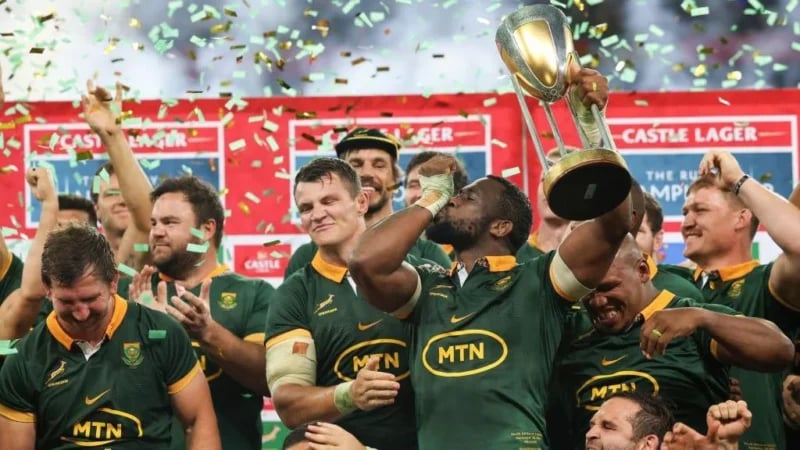
No nation has bent the Rugby World Cup to its will quite like South Africa. The Springboks missed the first two editions entirely, kept out by the sporting isolation of the apartheid years, yet they have gone on to lift the Webb Ellis Cup four times, more than any other country. Their story at the tournament is not one of relentless dominance across every match, but of arriving when it matters, winning tight games, and building a knockout pedigree that rivals now study rather than dismiss.
What follows is a decade-by-decade account of that record: the boycott years, the fairy-tale debut on home soil in 1995, the grinding triumph of 2007, and the back-to-back titles of 2019 and 2023 that pushed South Africa clear at the top of the all-time list.
The years in exile: 1987 and 1991
When the inaugural Rugby World Cup was staged in Australia and New Zealand in 1987, South Africa was absent. The country’s rugby, like the rest of its sport, sat under an international boycott tied to the apartheid system, and the Springboks were not invited to the second tournament in 1991 either. For a side long regarded as one of the game’s traditional heavyweights, two blank editions were a heavy price, and they help explain why South Africa’s tally is built on fewer appearances than most of its rivals.
Readmission came in 1992, and by the time the 1995 tournament was awarded to South Africa, the Springboks had a point to prove and a nation newly reunited watching on.
1995: the home miracle
South Africa’s first World Cup was also its first title. Hosting the event just three years after returning to the fold, the Springboks reached the final and met New Zealand at Ellis Park in Johannesburg. In a tense, defensively fierce contest, fly-half Joel Stransky scored all 15 of his side’s points, sealing a 15-12 win with a drop goal in extra time.
The image that endured had little to do with the scoreline. President Nelson Mandela, wearing a Springbok jersey, presented the trophy to captain Francois Pienaar, a moment widely read as a symbol of national reconciliation. It remains one of the most recognizable scenes in the sport’s history.
Between the peaks: 1999, 2003 and 2011
The years that followed brought quality without a title. In 1999, South Africa finished third, a campaign remembered above all for Jannie de Beer’s five drop goals in the quarterfinal against England, a single-match feat that still stands out in tournament lore. The Springboks then lost their semifinal to eventual champions Australia before winning the third-place playoff.
The 2003 tournament in Australia ended at the quarterfinal stage with a defeat to New Zealand. Eight years later, in 2011, South Africa arrived as defending champions but again fell in the last eight, edged 11-9 by Australia in a match the Springboks dominated territorially yet could not convert into points. Both exits underlined a recurring theme: in knockout rugby, small margins decide everything, a lesson South Africa would later master.
2007: control and a record try-scorer
The 2007 title, won in France, was a study in method. Under coach Jake White and captain John Smit, South Africa built its tournament on set-piece strength, aerial pressure and accurate goal-kicking. In the final at the Stade de France in Saint-Denis, the Springboks beat England 15-6. Neither side scored a try; fullback Percy Montgomery landed four penalties and centre Francois Steyn added a long-range fifth, while Jonny Wilkinson’s two penalties were all England could muster.
The tournament also belonged to wing Bryan Habana, who scored eight tries across the 2007 edition, matching Jonah Lomu’s single-tournament record. Habana finished his World Cup career with 15 tries, level with Lomu at the top of the all-time list.
2015: shock and recovery
South Africa’s 2015 campaign opened with one of the greatest upsets the sport has seen. In their first pool match, the Springboks lost 34-32 to Japan in Brighton, a result that reverberated well beyond rugby. To their credit, they regrouped, won the rest of their pool and advanced to the semifinals, where they lost 20-18 to New Zealand in a taut contest. A win over Argentina secured third place, but the abiding memory was the Brighton defeat and the resilience it took to reach the last four regardless.
2019: Kolisi and a third star
The 2019 tournament in Japan carried significance far beyond the result. Siya Kolisi, who had become the first Black player to captain the Springboks in test rugby, led the side to the title, the first Black captain to lift the World Cup. Under director of rugby Rassie Erasmus, South Africa lost their opening pool match to New Zealand but grew stronger through the knockout rounds.
In the final at Yokohama, they overwhelmed England 32-12, the biggest winning margin in a men’s World Cup final to that point. Handre Pollard’s kicking kept the scoreboard ticking, and late tries from Makazole Mapimpi and Cheslin Kolbe put the game beyond doubt. Mapimpi’s score was, notably, the first try South Africa had ever scored in a World Cup final.
2023: four titles, decided by inches
The 2023 tournament in France produced perhaps the hardest-earned crown of them all. South Africa won their three knockout matches by a single point each: 29-28 against the host nation France in the quarterfinal, 16-15 over England in the semifinal, and 12-11 against New Zealand in the final at the Stade de France. No team had ever navigated a World Cup knockout stage on such fine margins.
The final itself was extraordinary. New Zealand captain Sam Cane became the first player sent off in a men’s World Cup final, reduced to fourteen men before half-time. Even so, the All Blacks pressed hard, Beauden Barrett’s try narrowing the gap, but South Africa held on. Pollard kicked all twelve of his side’s points from four penalties. The win made South Africa the first nation to claim four men’s World Cup titles and completed back-to-back triumphs under Erasmus’s guidance, with Jacques Nienaber as head coach and Kolisi again lifting the trophy.
The Springboks’ World Cup titles at a glance
| Year | Host | Opponent in final | Score | Captain |
|---|---|---|---|---|
| 1995 | South Africa | New Zealand | 15-12 (a.e.t.) | Francois Pienaar |
| 2007 | France | England | 15-6 | John Smit |
| 2019 | Japan | England | 32-12 | Siya Kolisi |
| 2023 | France | New Zealand | 12-11 | Siya Kolisi |
An analytical takeaway
South Africa’s World Cup record is remarkable precisely because it is not a story of margin. Only the 2019 final was comfortable. The Springboks have instead built an identity around the closing stages of tight matches, whether that meant Stransky’s extra-time drop goal, Montgomery’s metronomic boot, or Pollard’s flawless kicking through a one-point final. Two missed tournaments and a Brighton humbling sit inside that same history, which makes the four stars above the badge stand out all the more. When the game reduces to a single kick or a single tackle, no side has answered the question more often than South Africa.